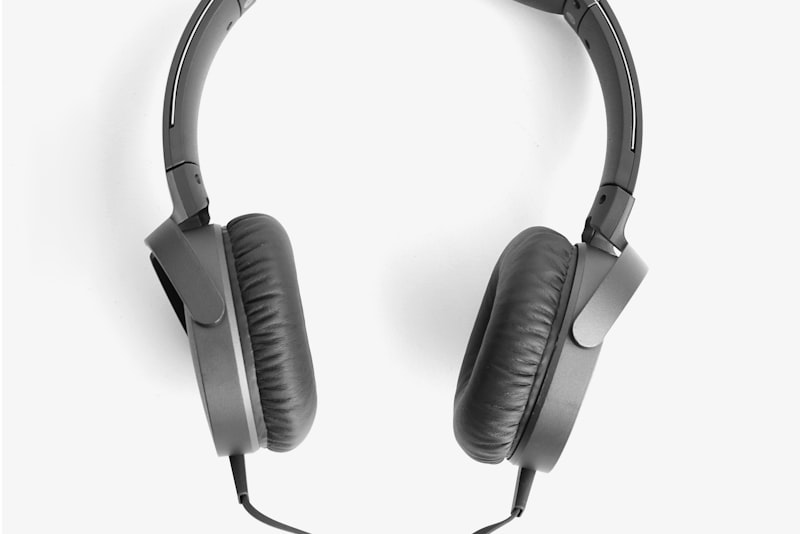
I get this question in my inbox more than almost any other: in 2026, does a cable still buy you better sound, or is that just audiophile nostalgia? After years of testing both kinds of headphones side by side on the same tracks, the same amps, and the same tired ears, my honest answer is that it depends entirely on what you're doing with them. Let me walk you through where each connection genuinely wins, and where the marketing gets ahead of reality.
How Much Has Wireless Actually Closed the Gap?#
Let's start with the elephant in the room. A decade ago, Bluetooth audio was a compromise you accepted for the freedom of no cable. That's much less true today. Codecs like aptX Lossless, LDAC, and LC3 (the codec that ships with LE Audio) can now carry enough data to reproduce CD-quality audio, and in some cases better than that, over the air.
In careful, level-matched listening, I struggle to reliably tell a good LDAC stream from a wired connection on the same pair of headphones. That's a real achievement, and anyone who tells you wireless "always sounds worse" is a few years out of date.
But there are important asterisks:
- The codec only matters if both ends support it. Your phone, the headphones, and the source app all have to agree. An iPhone still won't do LDAC or aptX at all, so a huge chunk of listeners never touch these "lossless" wireless modes.
- Bluetooth negotiates down under stress. Walk through a crowded train station and watch that pristine LDAC connection quietly drop to a lower bitrate to avoid stuttering. Wired never flinches.
- Lossless over Bluetooth still isn't universal. Even in 2026, the marketing word "lossless" hides a lot of conditions about range, interference, and battery mode.
So the gap has narrowed dramatically in the best case. The problem is that real life is rarely the best case.
The Sound Quality Question, Honestly#
Here's the nuance most comparisons miss. On wireless headphones, the electronics doing the heavy lifting are inside the cups: the DAC, the amplifier, and the tuning DSP are all baked in by the manufacturer. You get one voice, and it's usually a good one, because the company optimized the whole chain together.
With wired headphones, especially open-back models built for critical listening, you're plugging into your source. That's a double-edged sword.
Where wired pulls ahead#
The best wired headphones I've spent time with simply scale in a way wireless can't match yet. Feed a demanding planar-magnetic or high-impedance dynamic headphone from a proper desktop amplifier and you hear it: better grip on bass, more effortless dynamic swings, a bigger and more precisely placed soundstage. That headroom exists because a wall-powered amp isn't constrained by a coin-sized battery and thermal limits inside an earcup.
If your idea of listening is sitting still, eyes closed, chasing every detail in a recording, wired into good gear is still the ceiling. Not by a country mile anymore, but the ceiling is higher.
Where wireless is genuinely excellent#
For the vast majority of listening (commuting, working, walking, chores) the flagship wireless cans are so good that the differences shrink to the point of irrelevance. Active noise cancellation alone can make a wireless headphone the better-sounding choice in a noisy environment, because you're not fighting a wall of ambient rumble that masks the low end. A perfect wired signal is worthless if a bus engine is drowning out the bass.
Latency: The Deciding Factor Nobody Talks About Enough#
This is the one that quietly ruins experiences, and it's where wired is simply undefeated.
A cable transmits at effectively zero perceptible delay. Bluetooth has to buffer, encode, transmit, and decode, and that introduces latency measured in tens to low hundreds of milliseconds depending on the codec and devices.
Why does it matter?
- Gaming. Even modest latency throws off audio cues in fast games. Low-latency wireless modes and the newer LE Audio stack help a lot, but competitive players still reach for a cable or a dedicated low-latency dongle for a reason.
- Video. Most streaming apps auto-compensate for A/V sync, so you rarely notice lip-sync drift on Netflix. But scrub around, use a browser, or hit an app that doesn't compensate, and mouths stop matching words.
- Music production and monitoring. If you're recording or playing an instrument through headphones, Bluetooth latency is a non-starter. Full stop. Every producer I know monitors wired.
If any of those describe you, the debate is basically over before it starts.
Convenience and Daily Living#
Now let me argue the other side, because on pure day-to-day livability wireless wins decisively, and I say that as someone who owns far too many cables.
- No snag, no tangle. You stand up from your desk and you don't garrote yourself. Small thing; you feel it every single day.
- Multipoint pairing. Good wireless headphones hold connections to your laptop and phone at once and switch on the fly. That single feature has quietly changed how I work.
- Controls and voice assistants live on the earcup, so you're not fishing for an inline remote.
- Phones killed the headphone jack. This is the unavoidable practical reality. Most flagship phones no longer have a 3.5mm output, so "wired" often means carrying a USB-C dongle, which is its own small daily annoyance.
The flip side is the tax you pay for all this convenience:
- Batteries. Every wireless headphone is a device you have to remember to charge, and the battery inside will degrade over years of use in a way a copper cable never does. That's a genuine long-term ownership cost.
- Firmware and pairing gremlins. Wired headphones don't need updates, don't drop connection, and don't occasionally decide to pair with the wrong device in a meeting.
- When the battery finally dies for good, many wireless headphones become e-waste. A good wired headphone can outlive the phone it was bought for by a decade.
The Cost Argument#
Dollar for dollar, wired still gives you more sound. You're not paying for a battery, Bluetooth chips, ANC microphones, DSP, or an app team. All of that budget goes into the driver and the build.
That's why, at lower price points especially, a modest wired pair often outperforms a wireless pair costing noticeably more, and a good wired headphone bought today may still be serving you long after a comparable wireless model has been retired by a dead cell. If you value raw sound-per-dollar and longevity, wired is the value pick and it isn't especially close.
But "value" isn't the same as "right for you." Convenience has real worth, and paying for it is legitimate. I just want you spending with your eyes open.
So Which Should You Buy?#
Instead of crowning a universal winner, match the tool to the job:
- Buy wired if: you do critical desk listening, you produce or monitor music, you game competitively, you want maximum sound-per-dollar, or you want a headphone that lasts a decade without a battery to worry about.
- Buy wireless if: you commute, travel, exercise, take a lot of calls, want noise cancellation, or simply value never being tethered. For most people, most of the time, this is the honest answer.
- Buy both if you can, and don't feel bad about it. This is what most serious listeners I know actually do: a wireless pair for the world, a wired pair for the chair.
A quick reality check before you spend: don't let a spec sheet make the decision. "Supports LDAC" or "24-bit lossless" means nothing if your phone can't send it or your ears can't hear the difference on a bus. Buy for how you'll actually listen, not for the number that wins an argument online.
The Bottom Line#
Wireless has come far enough that, in the right conditions, it sounds superb, and for the way most of us live, it's the better everyday choice. Wired still owns the top of the sound-quality ladder, still wins on latency and value, and still refuses to die on you at the worst moment because a battery gave out.
The real answer in 2026 isn't wired or wireless. It's knowing which one you actually need for the way you listen, and choosing on that basis instead of on bragging rights. Do that, and there's no wrong answer here, only the right one for you.